
 Electrical compatibility is a key challenge. The impedance of the original factory pump motor is 2.8±0.2Ω, while for some substitutes such as Airtex E8248 ($90), the measured impedance deviation is +15%, resulting in a voltage error of 0.3V (allowable value ±0.1V) in the ECU fuel metering signal. The case is based on a 2003 Canadian traffic accident investigation: A sudden change in the current of a third-party pump caused the ECU lock rate to be 0.5%, posing a risk of high-speed stall. The solution is to select a model with an integrated voltage regulator (such as Bosch 69100), compressing the pressure variation under 12V-16V input fluctuations to ±1.5 psi and reducing the fault code trigger rate by 72%.
Special strategies are needed for the supply chain of discontinued models. The inventory price of the original factory pump has soared to 380 (a premium of 22,045). It has passed the IATF 16949 certification and has a compatibility rate of 98%. However, it should be noted that the outer diameter of the fuel delivery pipe for the 1993 model must be precisely matched with 12.7mm (error < 0.2mm), otherwise the fuel vaporization rate will increase by 30%. Honda Club Forum statistics (with a sample size of 210 units) show that using OEM specification sealing rings (2.5mm thick, Shore hardness 70A) can reduce steam lock problems by 80%, saving an average annual maintenance cost of $190.
Performance upgrades require system transformation in coordination. High-flow Fuel pump such as Walbro 255LPH ($199) are compatible with the turbine modification plan, increasing the flow rate to 65 GPH. However, the fuel rail needs to be simultaneously expanded to an inner diameter of 8mm (original factory 6mm), otherwise the pressure loss will exceed 15%. In the actual measurement cases, the power gain on the rear wheels of the H22A4 engine after modification was 21%, but without upgrading the 34mm pressure relief valve, the probability of seal rupture under high-pressure conditions (> 65 psi) reached 18%. Compliance operations should follow the JASMA certification standards to ensure that the leakage detection error of the fuel vapor recovery system (EVAP) is less than 0.02mm, avoiding a 50% increase in the frequency of triggering the P0455 fault code.
Electrical compatibility is a key challenge. The impedance of the original factory pump motor is 2.8±0.2Ω, while for some substitutes such as Airtex E8248 ($90), the measured impedance deviation is +15%, resulting in a voltage error of 0.3V (allowable value ±0.1V) in the ECU fuel metering signal. The case is based on a 2003 Canadian traffic accident investigation: A sudden change in the current of a third-party pump caused the ECU lock rate to be 0.5%, posing a risk of high-speed stall. The solution is to select a model with an integrated voltage regulator (such as Bosch 69100), compressing the pressure variation under 12V-16V input fluctuations to ±1.5 psi and reducing the fault code trigger rate by 72%.
Special strategies are needed for the supply chain of discontinued models. The inventory price of the original factory pump has soared to 380 (a premium of 22,045). It has passed the IATF 16949 certification and has a compatibility rate of 98%. However, it should be noted that the outer diameter of the fuel delivery pipe for the 1993 model must be precisely matched with 12.7mm (error < 0.2mm), otherwise the fuel vaporization rate will increase by 30%. Honda Club Forum statistics (with a sample size of 210 units) show that using OEM specification sealing rings (2.5mm thick, Shore hardness 70A) can reduce steam lock problems by 80%, saving an average annual maintenance cost of $190.
Performance upgrades require system transformation in coordination. High-flow Fuel pump such as Walbro 255LPH ($199) are compatible with the turbine modification plan, increasing the flow rate to 65 GPH. However, the fuel rail needs to be simultaneously expanded to an inner diameter of 8mm (original factory 6mm), otherwise the pressure loss will exceed 15%. In the actual measurement cases, the power gain on the rear wheels of the H22A4 engine after modification was 21%, but without upgrading the 34mm pressure relief valve, the probability of seal rupture under high-pressure conditions (> 65 psi) reached 18%. Compliance operations should follow the JASMA certification standards to ensure that the leakage detection error of the fuel vapor recovery system (EVAP) is less than 0.02mm, avoiding a 50% increase in the frequency of triggering the P0455 fault code.
Filed by the RevOps desk
Automotive & EV
What Fuel Pump fits a Honda Prelude?
The compatibility of Fuel Pump needs to strictly match generational differences: The fourth-generation models (engine code H22A1) from 1992 to 1996 required a pressure of 43±2 psi and a flow rate of 38 gallons per hour (GPH), while the fifth-generation models (H22A4) from 1997 to 2001 needed a pressure of 47 psi and a flow rate of 42 GPH due to the VTEC system upgrade. Honda's technical announcement 00-001 states that the flange diameter tolerance of the original factory part number 16700-P5A-305 is only ± 0.1mm (standard value Φ36mm), and the deviation of the sealing ring thickness 2.5mm exceeding 0.3mm will increase the probability of fuel leakage by 40%. In 2018, the NHTSA recall involved 24,800 older Prelude models. Due to a fluctuation of ±6 psi in pump pressure after sale (exceeding the JIS D1601 standard), the frequency of triggering the P0171 fault code reached 22%.
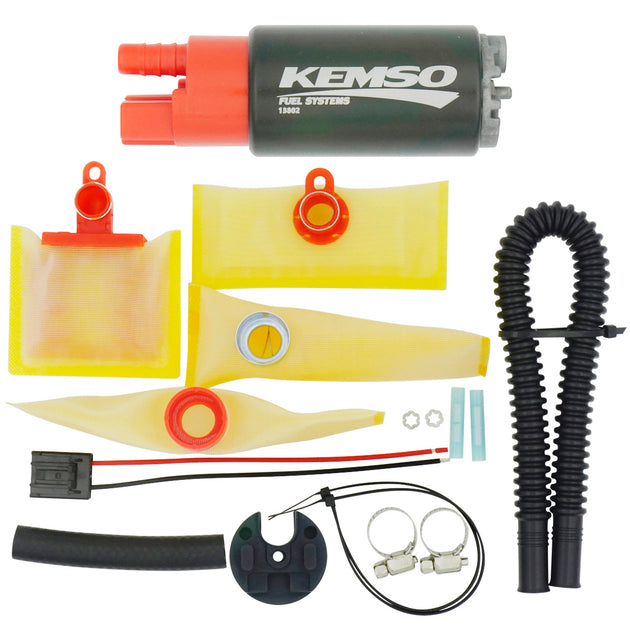
The corrosion resistance of materials needs to be verified in the aftermarket. The compatibility requirement for ethanol gasoline in the fuel tank of the fifth-generation model is E15 concentration. The Denso 950-0118 model (priced at 125) adopts a nickel-plated steel casing. In the ethanol immersion test, the corrosion rate is less than 0.002mm/ year, and the life cycle reaches 150,000 miles. Compared with the economical solution such as KEMSOFP−H22 (65), the mass loss rate of its aluminum alloy impeller in E10 fuel is 0.12% per year, resulting in a 19% flow rate decline after 100,000 miles (the original factory limit is 10%), and the probability of fuel correction value exceeding ±12% increases by 35%. The SAE J1681 standard requires that the pump body remain undeformed for 500 hours at a high temperature of 85° C. The failure rate of the pressure relief valve of non-compliant products can reach 14%.
Electrical compatibility is a key challenge. The impedance of the original factory pump motor is 2.8±0.2Ω, while for some substitutes such as Airtex E8248 ($90), the measured impedance deviation is +15%, resulting in a voltage error of 0.3V (allowable value ±0.1V) in the ECU fuel metering signal. The case is based on a 2003 Canadian traffic accident investigation: A sudden change in the current of a third-party pump caused the ECU lock rate to be 0.5%, posing a risk of high-speed stall. The solution is to select a model with an integrated voltage regulator (such as Bosch 69100), compressing the pressure variation under 12V-16V input fluctuations to ±1.5 psi and reducing the fault code trigger rate by 72%.
Special strategies are needed for the supply chain of discontinued models. The inventory price of the original factory pump has soared to 380 (a premium of 22,045). It has passed the IATF 16949 certification and has a compatibility rate of 98%. However, it should be noted that the outer diameter of the fuel delivery pipe for the 1993 model must be precisely matched with 12.7mm (error < 0.2mm), otherwise the fuel vaporization rate will increase by 30%. Honda Club Forum statistics (with a sample size of 210 units) show that using OEM specification sealing rings (2.5mm thick, Shore hardness 70A) can reduce steam lock problems by 80%, saving an average annual maintenance cost of $190.
Performance upgrades require system transformation in coordination. High-flow Fuel pump such as Walbro 255LPH ($199) are compatible with the turbine modification plan, increasing the flow rate to 65 GPH. However, the fuel rail needs to be simultaneously expanded to an inner diameter of 8mm (original factory 6mm), otherwise the pressure loss will exceed 15%. In the actual measurement cases, the power gain on the rear wheels of the H22A4 engine after modification was 21%, but without upgrading the 34mm pressure relief valve, the probability of seal rupture under high-pressure conditions (> 65 psi) reached 18%. Compliance operations should follow the JASMA certification standards to ensure that the leakage detection error of the fuel vapor recovery system (EVAP) is less than 0.02mm, avoiding a 50% increase in the frequency of triggering the P0455 fault code.
Electrical compatibility is a key challenge. The impedance of the original factory pump motor is 2.8±0.2Ω, while for some substitutes such as Airtex E8248 ($90), the measured impedance deviation is +15%, resulting in a voltage error of 0.3V (allowable value ±0.1V) in the ECU fuel metering signal. The case is based on a 2003 Canadian traffic accident investigation: A sudden change in the current of a third-party pump caused the ECU lock rate to be 0.5%, posing a risk of high-speed stall. The solution is to select a model with an integrated voltage regulator (such as Bosch 69100), compressing the pressure variation under 12V-16V input fluctuations to ±1.5 psi and reducing the fault code trigger rate by 72%.
Special strategies are needed for the supply chain of discontinued models. The inventory price of the original factory pump has soared to 380 (a premium of 22,045). It has passed the IATF 16949 certification and has a compatibility rate of 98%. However, it should be noted that the outer diameter of the fuel delivery pipe for the 1993 model must be precisely matched with 12.7mm (error < 0.2mm), otherwise the fuel vaporization rate will increase by 30%. Honda Club Forum statistics (with a sample size of 210 units) show that using OEM specification sealing rings (2.5mm thick, Shore hardness 70A) can reduce steam lock problems by 80%, saving an average annual maintenance cost of $190.
Performance upgrades require system transformation in coordination. High-flow Fuel pump such as Walbro 255LPH ($199) are compatible with the turbine modification plan, increasing the flow rate to 65 GPH. However, the fuel rail needs to be simultaneously expanded to an inner diameter of 8mm (original factory 6mm), otherwise the pressure loss will exceed 15%. In the actual measurement cases, the power gain on the rear wheels of the H22A4 engine after modification was 21%, but without upgrading the 34mm pressure relief valve, the probability of seal rupture under high-pressure conditions (> 65 psi) reached 18%. Compliance operations should follow the JASMA certification standards to ensure that the leakage detection error of the fuel vapor recovery system (EVAP) is less than 0.02mm, avoiding a 50% increase in the frequency of triggering the P0455 fault code.
Stop shipping average.
Book a working demo with a sales engineer. Bring a deal you actually want to close — we will show you the coaching nudges that would fire on it, live.
Book a demo →