
 In the face of extreme working conditions such as high temperatures and vibrations, the durability of fans is of vital importance, and the type of bearings is the key. Fans with double ball bearings have an average lifespan three times longer than those with oil-impregnated bearings, and the upper limit of the working environment temperature they can withstand has also been raised to 70 degrees Celsius. Market analysis shows that the global industrial fan market is growing at an annual rate of 6%, with the demand for smart temperature-controlled fans growing particularly significantly. These products can automatically adjust their rotational speed based on internal temperature (for example, starting at 35 degrees Celsius and running at full speed at 55 degrees Celsius through NTC sensors), reducing energy consumption by another 25%. Referring to the application cases of Mitsubishi Electric in the heavy industry sector, fans with integrated fault alarm functions can reduce unexpected downtime by 30%, directly protecting the continuity of the production line.
The final decision should be based on a comprehensive assessment: for high heat density inverter cabinets, powerful cooling fans with air volume exceeding 300 CFM may be required for cabinets; For control boxes with limited space, compact products with dimensions of 120mm x 120mm are more suitable. Tests conducted in accordance with the IEC 61439 standard of the International Electrotechnical Commission show that the correct selection of fans can reduce the failure rate of electronic components by 40%. Therefore, only by precisely calculating based on specific loads, environmental conditions and total cost of ownership can the industrial-grade companion that best enhances system reliability and economic benefits be identified.
In the face of extreme working conditions such as high temperatures and vibrations, the durability of fans is of vital importance, and the type of bearings is the key. Fans with double ball bearings have an average lifespan three times longer than those with oil-impregnated bearings, and the upper limit of the working environment temperature they can withstand has also been raised to 70 degrees Celsius. Market analysis shows that the global industrial fan market is growing at an annual rate of 6%, with the demand for smart temperature-controlled fans growing particularly significantly. These products can automatically adjust their rotational speed based on internal temperature (for example, starting at 35 degrees Celsius and running at full speed at 55 degrees Celsius through NTC sensors), reducing energy consumption by another 25%. Referring to the application cases of Mitsubishi Electric in the heavy industry sector, fans with integrated fault alarm functions can reduce unexpected downtime by 30%, directly protecting the continuity of the production line.
The final decision should be based on a comprehensive assessment: for high heat density inverter cabinets, powerful cooling fans with air volume exceeding 300 CFM may be required for cabinets; For control boxes with limited space, compact products with dimensions of 120mm x 120mm are more suitable. Tests conducted in accordance with the IEC 61439 standard of the International Electrotechnical Commission show that the correct selection of fans can reduce the failure rate of electronic components by 40%. Therefore, only by precisely calculating based on specific loads, environmental conditions and total cost of ownership can the industrial-grade companion that best enhances system reliability and economic benefits be identified.
Filed by the RevOps desk
Industrial Machinery & Manufacturing
Which cooling fans for cabinets are best for industrial use?
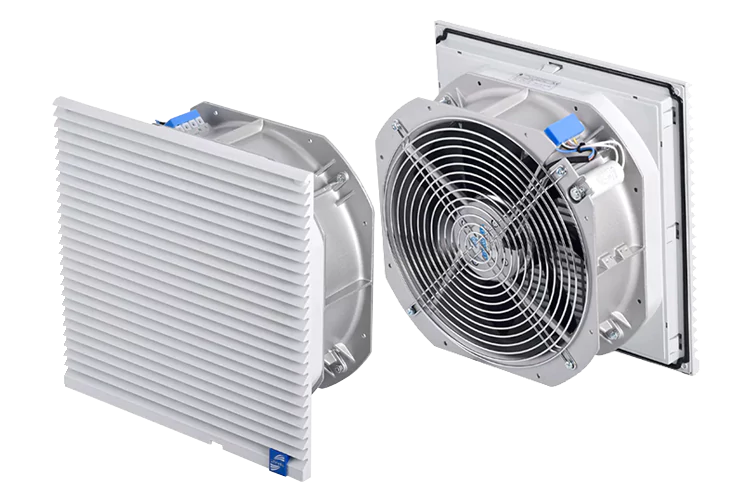
When choosing cooling fans for cabinets industrial environments, the protection level is the primary consideration. They must meet at least the IP54 standard to ensure effective resistance to dust and high-pressure water flow. According to a three-year tracking study by ABB, in a high-dust environment like a steel plant, the failure rate of equipment using IP55 grade fans is 70% lower than that of IP20 standard products. This means that the average mean time between failures can be extended from 10,000 hours to over 30,000 hours. For instance, Siemens explicitly recommends in its digital factory solution that the air volume of the fan should be no less than 200 CFM to ensure that the internal temperature of the cabinet is controlled within the ideal range of 5 degrees Celsius higher than the ambient temperature.
From the perspective of energy efficiency and operating costs, cooling fans using DC brushless technology can save up to 40% more energy than traditional AC fans, and their power consumption is usually as low as 15 watts. A report released by Rockwell Automation indicates that on a production line with 50 control cabinets, if all are replaced with high-efficiency fans, approximately 8,000 kilowatt-hours of electricity can be saved annually, equivalent to a reduction of 6,000 yuan in electricity costs. The payback period for investment is typically within 18 months. The lifespan of this type of fan typically exceeds 60,000 hours, enhancing the comfort of the working environment with its nearly silent operation (noise level below 35 decibels). Just like in an automated factory of Bosch, after a comprehensive upgrade of the cooling system, the overall equipment efficiency increased by 5 percentage points.
In the face of extreme working conditions such as high temperatures and vibrations, the durability of fans is of vital importance, and the type of bearings is the key. Fans with double ball bearings have an average lifespan three times longer than those with oil-impregnated bearings, and the upper limit of the working environment temperature they can withstand has also been raised to 70 degrees Celsius. Market analysis shows that the global industrial fan market is growing at an annual rate of 6%, with the demand for smart temperature-controlled fans growing particularly significantly. These products can automatically adjust their rotational speed based on internal temperature (for example, starting at 35 degrees Celsius and running at full speed at 55 degrees Celsius through NTC sensors), reducing energy consumption by another 25%. Referring to the application cases of Mitsubishi Electric in the heavy industry sector, fans with integrated fault alarm functions can reduce unexpected downtime by 30%, directly protecting the continuity of the production line.
The final decision should be based on a comprehensive assessment: for high heat density inverter cabinets, powerful cooling fans with air volume exceeding 300 CFM may be required for cabinets; For control boxes with limited space, compact products with dimensions of 120mm x 120mm are more suitable. Tests conducted in accordance with the IEC 61439 standard of the International Electrotechnical Commission show that the correct selection of fans can reduce the failure rate of electronic components by 40%. Therefore, only by precisely calculating based on specific loads, environmental conditions and total cost of ownership can the industrial-grade companion that best enhances system reliability and economic benefits be identified.
In the face of extreme working conditions such as high temperatures and vibrations, the durability of fans is of vital importance, and the type of bearings is the key. Fans with double ball bearings have an average lifespan three times longer than those with oil-impregnated bearings, and the upper limit of the working environment temperature they can withstand has also been raised to 70 degrees Celsius. Market analysis shows that the global industrial fan market is growing at an annual rate of 6%, with the demand for smart temperature-controlled fans growing particularly significantly. These products can automatically adjust their rotational speed based on internal temperature (for example, starting at 35 degrees Celsius and running at full speed at 55 degrees Celsius through NTC sensors), reducing energy consumption by another 25%. Referring to the application cases of Mitsubishi Electric in the heavy industry sector, fans with integrated fault alarm functions can reduce unexpected downtime by 30%, directly protecting the continuity of the production line.
The final decision should be based on a comprehensive assessment: for high heat density inverter cabinets, powerful cooling fans with air volume exceeding 300 CFM may be required for cabinets; For control boxes with limited space, compact products with dimensions of 120mm x 120mm are more suitable. Tests conducted in accordance with the IEC 61439 standard of the International Electrotechnical Commission show that the correct selection of fans can reduce the failure rate of electronic components by 40%. Therefore, only by precisely calculating based on specific loads, environmental conditions and total cost of ownership can the industrial-grade companion that best enhances system reliability and economic benefits be identified.
Stop shipping average.
Book a working demo with a sales engineer. Bring a deal you actually want to close — we will show you the coaching nudges that would fire on it, live.
Book a demo →